PM interview coaches versus AI mock interviews: how to choose
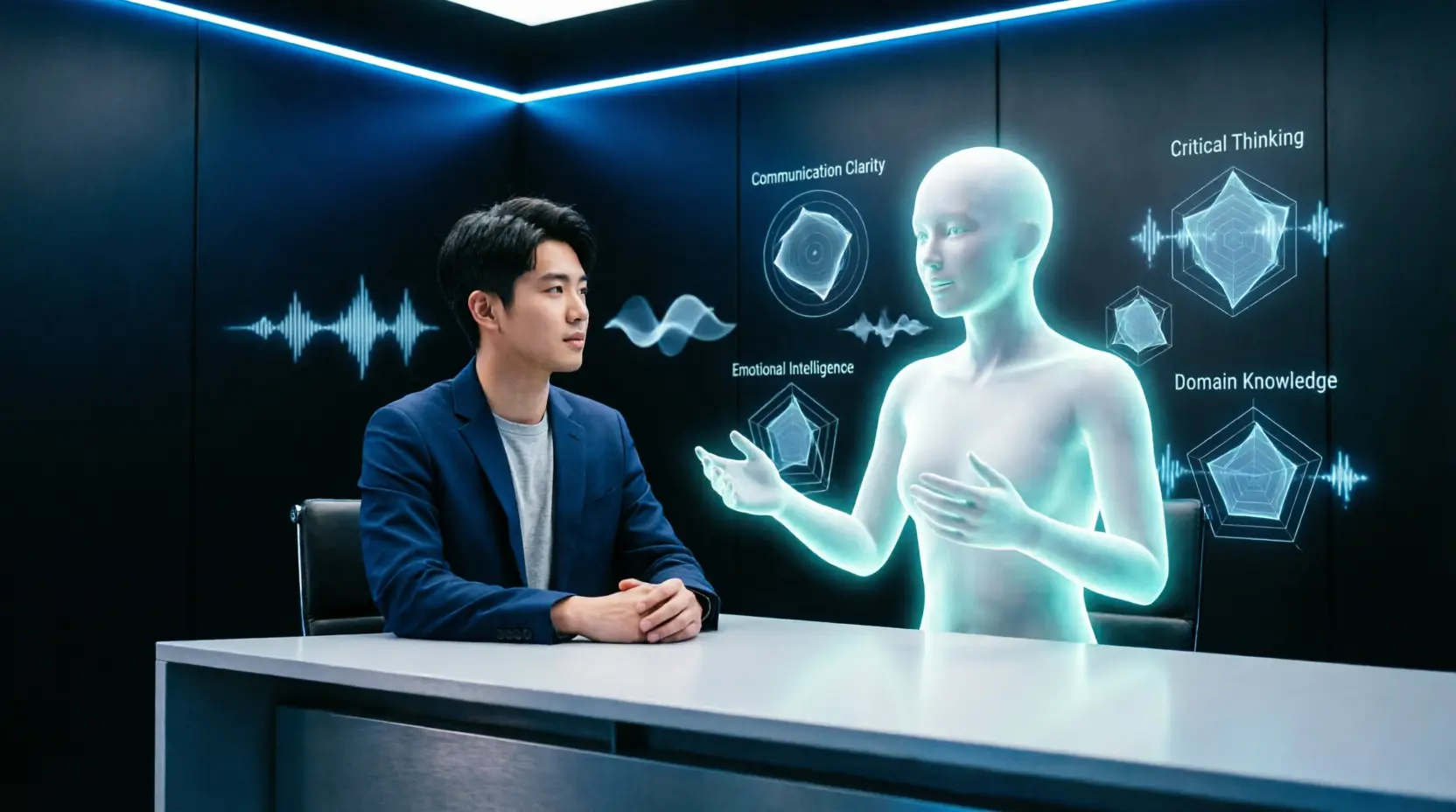
Decide between a PM interview coach and AI mock interviews by weighing your budget, need for personalized feedback, and comfort with self-directed practice. Use AI for affordable repetition and clarity, but invest in coaching for nuanced, behavioral feedback or if you struggle to self-diagnose weaknesses.
 PMMockr.com
Making the first call: a practical budget trade-off
Suppose you have $400 set aside for PM interview prep. A single session with an experienced coach costs $200, while a month of unlimited AI mock interviews is $40. Choosing where to spend has lasting effects: opt for coaching and your prep becomes focused but brief; pick AI and you gain volume but may miss subtle feedback. The decision shapes your confidence, skill, and readiness on interview day.
The mistake many candidates make is defaulting to the most expensive option, assuming higher cost always means higher impact. Instead, start by clarifying your goals: Do you need help identifying specific weaknesses, or do you mostly want practice and structure?
What a PM interview coach really offers
A skilled PM interview coach brings tailored feedback, behavioral insight, and real-time adjustment. They spot not just what you say, but how you say it—tone, hesitations, and subtle gaps between intent and impact. If you freeze on ambiguous questions or struggle to connect frameworks to real product stories, a coach can pinpoint why and suggest targeted exercises.
However, this value relies on your ability to internalize and act on brief, sometimes subjective feedback. Coaches are best for candidates who plateau on their own, or who have specific recurring issues like rambling, shallow examples, or weak stakeholder empathy.
What AI mock interviews can and cannot do
AI mock interviews provide low-cost, unlimited practice with instant, objective feedback. They help you get comfortable with question formats, time constraints, and clear structure. For common product sense or estimation problems, repetition with AI builds baseline competence and reduces nerves.
But AI lacks the ability to notice when your story feels rehearsed, your body language undermines your answer, or your assumptions contradict each other. It cannot push back on subtle misunderstandings or probe for deeper insight unless you prompt it directly. Used alone, AI risks reinforcing bad habits if you do not critically review its feedback.
Worked example: prioritizing your prep investment
Assume you are preparing for a PM interview at a mid-size SaaS company. You have $400 and two weeks. You identify two main user segments for your prep: yourself, when practicing alone (self-driven), and yourself, when under live pressure (performance-driven).
You consider two options: - Spend all $400 on two coaching sessions, hoping for rapid improvement. - Allocate $80 for two months of AI, keeping $320 for one live coaching session and a professional resume review.
You choose the second path. First, you use AI to practice daily, recording your answers and comparing them to model responses. This reveals a pattern: your answers are concise but lack compelling examples. Next, you book a coaching session, sharing this insight. The coach confirms your self-assessment and helps you develop richer stories, focusing on impact and stakeholder tension.
A competing option would be to rely entirely on AI, banking on sheer volume to uncover and fix weaknesses. The risk: you might not notice subtle gaps, such as your tendency to avoid discussing failures. By mixing AI and coaching, you gain both breadth of practice and depth of feedback.
To validate your approach, you track your performance in mock interviews: if your AI scores plateau or your coach identifies new recurring issues, you adjust your mix (perhaps booking another session or shifting more time to targeted practice). If evidence shows your answers remain flat or you feel unprepared in live settings, you would reconsider, possibly reallocating funds back to more coaching.
How to assess your own needs honestly
The key to an effective prep plan is recognizing where you struggle and how you learn best. If you consistently self-correct, spot your own mistakes, and improve with repetition, AI tools can carry you far. But if you find it hard to recognize weaknesses or adapt under stress, coaching may be essential.
Overestimating your ability to self-diagnose is a common pitfall. Weak reasoning often sounds like, 'I keep practicing, so I must be improving.' A stronger approach is to compare your answers to benchmarks, seek outside perspectives, and measure progress with objective criteria.
Comparing weak and strong reasoning in prep choices
A candidate might think, 'Since AI is cheaper and available anytime, I don’t need a coach at all.' This reasoning ignores the possibility of blind spots and the unique value of human feedback.
A better alternative is to ask, 'Where does AI feedback consistently fail to address my challenges? Have I tested myself in a live, high-pressure setting?' Strong reasoning weighs not just cost and convenience, but the nature of feedback and the candidate’s own self-awareness.
Risks and mitigations: avoiding common pitfalls
Relying solely on AI risks reinforcing errors, especially if you do not review your answers critically or seek external validation. On the other hand, relying only on coaching can be expensive and may limit your volume of practice.
A balanced approach mitigates both risks: use AI to practice and identify patterns, then bring those findings to a coach for deep dives. Adjust your investment as you uncover new weaknesses or as your confidence grows.
How to test and adapt your prep strategy
Set explicit goals for your prep. For example, aim to improve your answer structure score from 6/10 to 8/10 on AI tools, and to receive positive feedback on storytelling from a coach within three sessions. After each practice session—AI or coaching—review your performance and note recurring issues.
If you notice diminishing returns or feel stuck, change your approach: increase live practice, seek peer interviews, or shift more budget to coaching. The right mix is dynamic, not fixed.
Practice exercise: simulate a budget decision under pressure
Set a timer for 12 minutes. Imagine you have $250 and one week to prepare for a PM interview at a consumer tech company. Write down two prep strategies—one AI-heavy, one coaching-heavy. List two risks for each, and propose one way to test which is working better.
Afterwards, review your plan using the self-review checklist below. Practice this exercise weekly as your interview approaches, adjusting your strategy based on new feedback.
Self-review checklist
Before finalizing your prep plan, ask yourself:
- Have I clearly identified my main weaknesses and strengths? - Am I allocating budget to both breadth (practice volume) and depth (quality feedback)? - Do I have a way to measure progress and adapt if results stall? - Have I tested myself in conditions similar to the real interview?
Aim to revisit your plan every week, adjusting as you gather new evidence from practice and feedback.
FAQ
How do I know if I need a PM interview coach?
Consider a coach if you struggle to identify or fix recurring issues, feel stuck after repeated AI practice, or need help with behavioral storytelling and presence. If you improve steadily with self-driven feedback, AI may be sufficient.
Is it effective to combine AI mock interviews and coaching?
Yes, combining both allows you to use AI for affordable repetition and structure, then target deeper issues in limited coaching sessions. This approach balances cost with high-quality feedback and can adapt as your needs change.
How often should I review and adjust my prep strategy?
Review your prep approach weekly, tracking both AI scores and feedback from human coaches or peers. Adjust your mix of practice and coaching if you notice recurring weaknesses or if progress stalls, ensuring continued improvement.